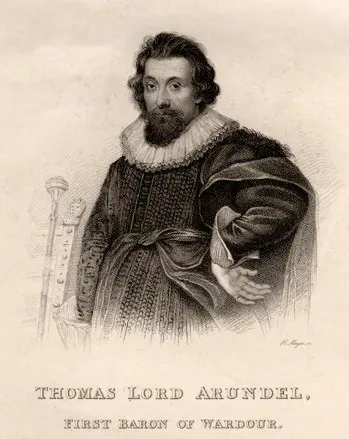
Few English nobles of the early seventeenth century lived lives as perilous or as fascinating as Thomas Arundell (c. 1560–1639). Born into the ancient family of Arundell of Wardour, he endured shifting fortunes under Tudor and Stuart monarchs, served with distinction on continental battlefields, earned noble titles at home and abroad, and saw his family become entwined with the colonization of America. In this post we explore the life of this colorful figure: his heritage, his military career, his steadfast Catholicism amid persecution, and the enduring connections his family forged with the New World.

An Ancient Lineage and Early Life
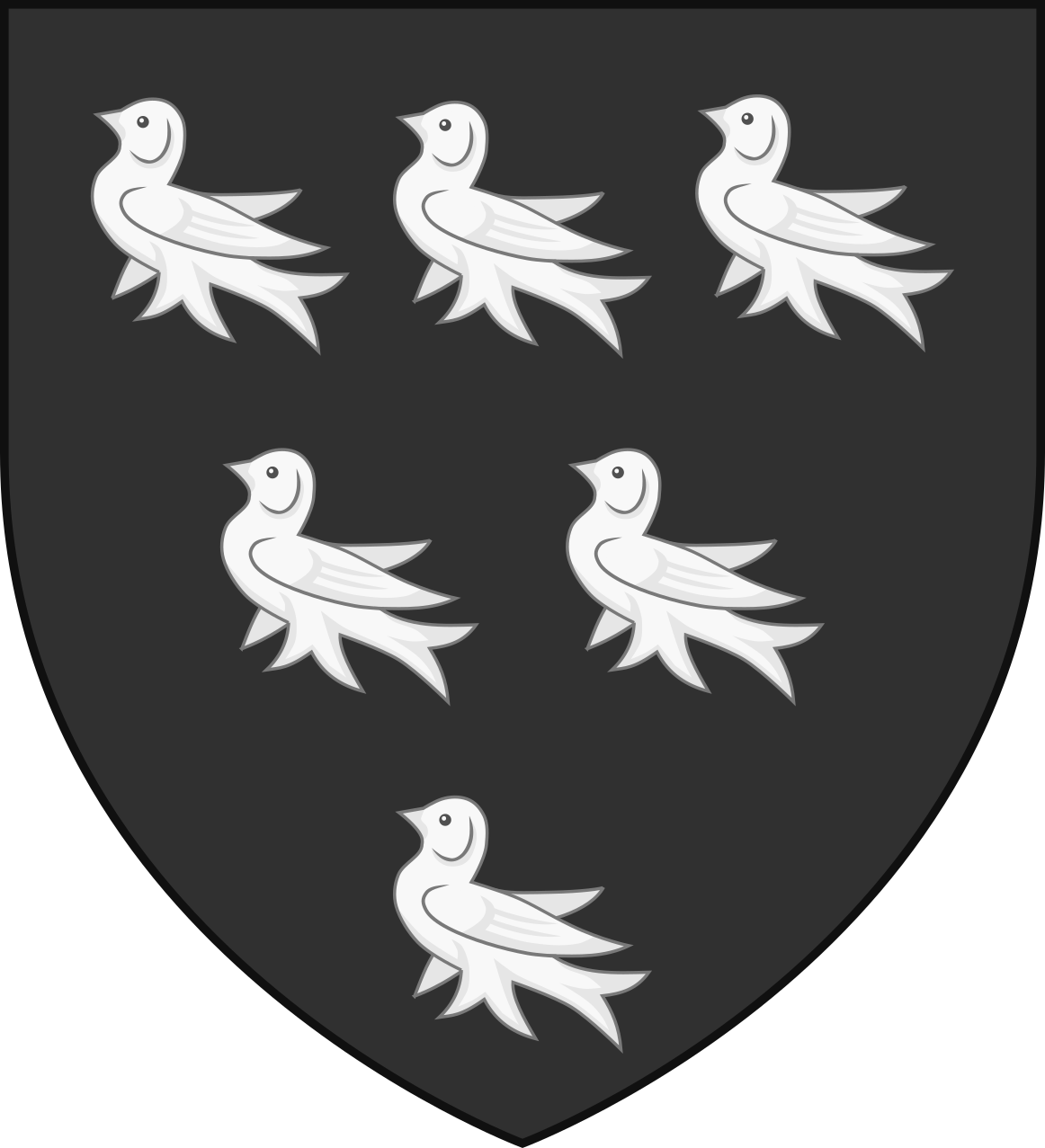
Thomas Arundell was born around 1560 to Sir Matthew Arundell of Wardour Castle in Wiltshire and Margaret Willoughby. Both parents came from long noble lines in England; Matthew Arundell’s mother was Margaret Howard, a sister of Queen Catherine Howard, and Margaret Willoughby’s mother was Anne Grey, daughter of the ancient House of Grey. The Arundells were one of England’s oldest families; their ancestry traced back to the Normans, and they had held Wardour since the fourteenth century. Thomas was also a cousin to Queen Elizabeth.
In 1552 Thomas’s grandfather, Sir Thomas Arundell, was executed for treason after the fall of Protector Somerset. Margaret Howard fled to the continent with her children. The exiled family used Margaret’s surname “Howard” until their attainder was reversed in 1554. Sir Matthew returned to England and regained Wardour, and Thomas was raised amid the tensions between his family’s recusant Catholicism and an officially Protestant realm.
After the family’s confiscated estates were returned, Sir Matthew Arundell repurchased the manor of Wardour in 1570 and set about rebuilding his ancestral seat. He engaged the celebrated architect Robert Smythson to redesign Wardour Castle into a grand country house and later bought the neighbouring manor of Ansty. Growing up amid these renovations, Thomas observed both the fragility and resilience of noble status. The Arundells’ financial sacrifices for architectural projects also underscored their commitment to leaving a lasting legacy for future generations.
Family and Marriage
Arundell’s family life was as full of consequence as his public career. His first marriage, in 1585, was to Lady Mary Wriothesley, daughter of Henry Wriothesley, 2nd Earl of Southampton, aligning the Arundells with one of England’s most prominent noble houses. This union produced three children: Thomas, who succeeded as 2nd Baron Arundell of Wardour; Elizabeth Mary, who married into the noble Fitzwilliam family; and William, about whom less is known. After Mary’s death in 1607, Arundell remarried the following year, taking as his second wife Anne Philipson of Crook Hall, Westmorland. Anne came from a distinguished northern family with ties to the border gentry and broader networks in Cumberland and Westmorland.
The marriage was prolific. Together they had at least ten children: Matthew (born 1609, who reportedly died young), Catherine, Anne, two daughters named Mary (the first dying in infancy), Frances, Margaret, Clara, Thomas, and Frederick. The younger Thomas and Frederick would play roles in the Civil War and later management of the Wardour estate, while the daughters married into some of the leading recusant and aristocratic families of the time. Through these strategic matrimonial alliances, with houses such as the Eures, Somersets, Talbots, Fortescues, and Welds, the Arundells extended their influence across the English Catholic nobility. These alliances not only strengthened their social position but also wove the Arundells more deeply into the network of Catholic resistance and preservation during an era of intense religious tension in England.
A Military Career Amid Recusancy
From an early age, Arundell’s unwavering recusancy, his refusal to attend Church of England services and support of Catholic clergy, regularly brought him into sharp conflict with Elizabethan authorities. Throughout the 1580s and 1590s, he was subjected to heavy fines, placed under surveillance, and imprisoned on multiple occasions for harbouring Catholic priests, offenses now well documented in ecclesiastical and legal records. His home at Wardour Castle, known as a hub of recusant activity, drew increasing suspicion from the Crown, especially as anti‑Catholic statutes grew stricter. Scholar Andrew Hopper notes that in 1623 he was formally committed to custody for “championing the cause of recusants,” a signal of how central his Catholic identity remained to his public persona.
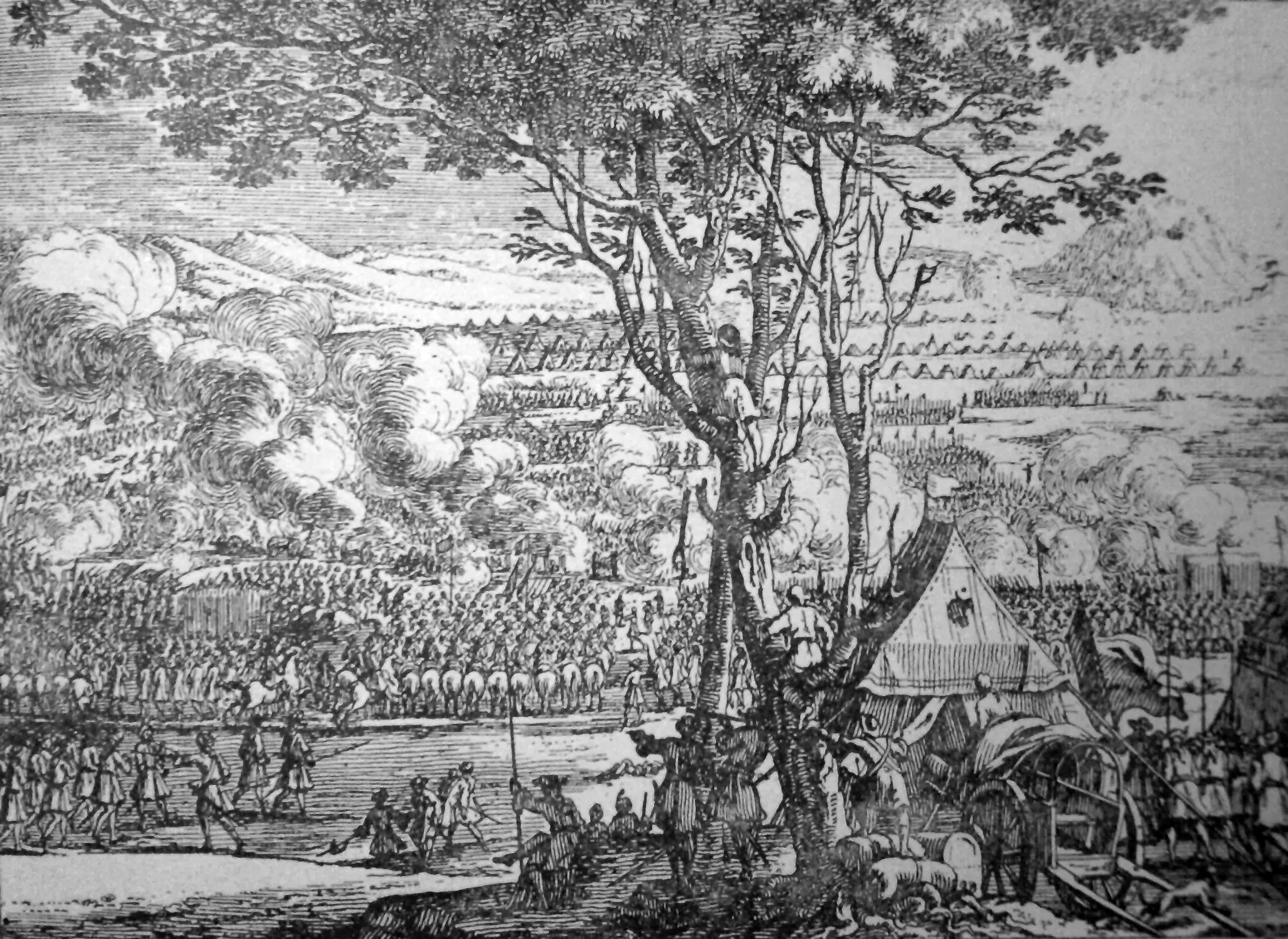
In the early 1590s, Arundell volunteered to fight under Emperor Rudolf II, Holy Roman Emperor, in the ongoing struggle against the Ottoman Turks in Hungary. This was not merely a religious crusade but also an attempt to defend Christendom’s eastern frontier and reclaim territory from Ottoman control. At the Siege of Gran (Esztergom) in 1595, Arundell distinguished himself in dramatic fashion: he reportedly led a storming party over the city’s walls, tore down the Turkish crescent, and raised the imperial standard in its place. The act made him a hero in the Habsburg court.
In recognition of his valor, Emperor Rudolf II conferred upon him the hereditary title of Count of the Holy Roman Empire, a rare and prestigious foreign honor. But the award caused diplomatic tension back home. Elizabeth I, who jealously guarded her prerogatives over English nobles, reacted first with anger. Arundell was briefly imprisoned in the Fleet for accepting a foreign title without the Queen’s permission, and she ordered him into temporary banishment from court. Yet political necessity and his family’s stature soon softened her stance, and Arundell was quietly restored to favor not long after. The incident would mark him permanently, however, as a figure straddling two worlds: the English aristocracy and the Catholic-European nobility beyond.
Following the accension of James VI and I, Arundell found favor at court. In 1605 the king elevated him to the peerage as Baron Arundell of Wardour. This honour recognised both his distinguished service abroad and his family’s standing. The early Stuart period allowed Arundell to rehabilitate his public life. James I granted him a general pardon in 1603, and in 1610 Arundell took the Oath of Allegiance, pledging loyalty to the king while clinging to his Catholic faith. During these years he continued to seek military engagement: when a regiment of English mercenaries was raised to support the Spanish crown against Dutch rebels, Arundell was appointed its colonel. Although the expedition faltered, the commission demonstrated his lingering reputation as a capable commander. Around the same time he oversaw construction of the Banqueting House at Ansty, an elegant building possibly designed by William Arnold, showcasing his patronage of architecture and the arts.
Arundell’s household at Wardour remained a Catholic stronghold. The family maintained private chaplains and harboured recusant priests. During the 1610s and 1620s, as anti‑Catholic legislation stiffened and the Gunpowder Plot unsettled authorities, the Arundell’s were fined for non‑attendance at the Anglican parish church. Though such penalties were common among recusant families, the scale and visibility of Wardour’s defiance marked it as a particular target. Nevertheless, the Arundells preserved the old faith at great personal and financial cost, maintaining an unbroken Catholic identity across generations.
Later Life and Broader Influence
Although the high points of Arundells life centre on battles and titles, his later years deserve attention as well. As an ageing nobleman he devoted considerable time to managing his lands in Wiltshire and Somerset, overseeing the completion of the new Wardour Castle and the Banqueting House at Ansty, and ensuring his younger children were settled. His accounts show that he patronised musicians, masons and glaziers, reflecting a genuine interest in Renaissance culture and architecture.
Arundell’s household at Wardour Castle was known for its extravagant hospitality, a fitting reflection of his status and Renaissance courtly ideals. His Great Hall, refurbished in the 1570s by Matthew Arundell (Thomas’s father), hosted banquets and retained a musicians’ gallery, evidencing that festive dining was integral to the household’s routine. A mid‑Tudor visitor commented on how noble the appointments and provisions appeared in comparison to other Wiltshire manors. Furthermore, architectural scholarship notes that the large, paneled hall and nearby lobby were explicitly designed to accommodate sizeable dinner parties and leisure gatherings, underlining Arundell’s role as a county magnate and host rather than a secluded recusant.
During the 1620s and 1630s Arundell corresponded with other Catholic gentry, advising them on how to navigate fines for recusancy and the legal complexities of taking the oath of allegiance. Letters preserved in local record offices show him petitioning the Privy Council for leniency toward Catholic tenants and interceding for neighbours facing prosecution. This behind‑the‑scenes advocacy highlights another facet of his leadership: as a patriarch of a recusant community, he accepted responsibility for the spiritual and temporal welfare of those under his influence. He also supported educational initiatives; a family chronicle notes he funded the education of several nieces and nephews when their fathers could not.
Thomas Arundell died on 7 November 1639 and was buried at the family chapel near Wardour. His life spanned the tumultuous decades of the Reformation, the Spanish Armada, and the onset of civil war. He embodied the contradictions of his age: a devout Catholic loyal to a Protestant crown, an English noble who became a count of the Holy Roman Empire, and the father of a woman whose name still graces an American county. Arundell’s story reminds us that early modern English history was not confined to the island—its actors and their descendants left footprints across the globe.
Yet his descendants continued to shape history. The barony passed through eight generations before being extinguished in the nineteenth century. Through the marriage of his daughter Anne to Cecil Calvert, his bloodline entered the aristocracy of the New World, and the county named for her remains a lasting monument. Whether celebrated for his bravery at Gran, his cultural patronage, or his familys colonial connections, Thomas Arundell remains a figure who bridges the worlds of Tudor politics, imperial warfare and American settlement.
Why He Remains Interesting Today
Thomas Arundell captures our interest because he connects threads that span continents and centuries. For military historians, he is an Englishman who fought the Ottomans and was ennobled by the emperor, a rare crossover between English and imperial nobility. For students of religious history, his steadfast Catholicism, fines for recusancy and open defiance of anti‑Catholic laws illustrate the precarious position of Catholic nobles in post‑Reformation England. His daughters marriage to Cecil Calvert ties him to the founding of Maryland, linking the English aristocracy with colonial America.
Thomas Arundells life is thus a microcosm of the complexities of early modern England, encompassing courtly politics, foreign wars, religious strife and colonial aspirations. His story continues to resonate with anyone interested in the interplay between European nobility and the formation of America.