
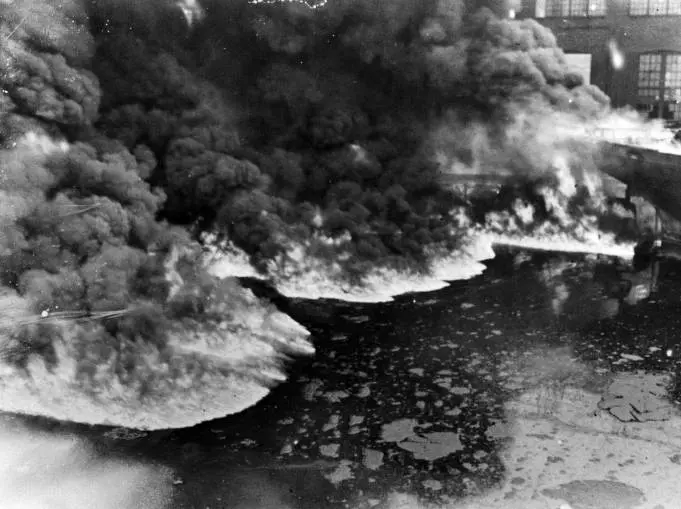
When people talk about the Great Lakes in the late twentieth century, they often do so with an air of despair. By the 1960s, the lakes were badly polluted. Industrial waste, agricultural runoff, and untreated sewage poured into them. Lake Erie, in particular, was widely described as “dead” after toxic algal blooms and oxygen-deprived “dead zones” wiped out fish stocks. Even the Cuyahoga River caught fire in 1969, a symbol of how bad things had become.
Then, in the late 1980s, something remarkable happened: the water in the Great Lakes suddenly looked clear. Tourists noticed they could see farther into the water than they ever remembered. Beaches looked cleaner. The press picked up on the story, and some even claimed that Lake Erie was “coming back.”
The real reason was not new pollution controls or a miraculous rebound of nature. It was zebra mussels.
A stowaway from the Old World
Zebra mussels (Dreissena polymorpha) are small, stripy, fingernail-sized bivalves native to the Caspian and Black Seas. They were first discovered in Lake St. Clair, between Lakes Erie and Huron, in 1988. Scientists traced their arrival to ballast water from European freighters. Within just a few years, they spread across all five Great Lakes and down connected river systems. Today, they are established in more than 30 U.S. states.
Unlike many native mussels, zebra mussels can attach themselves to hard surfaces using sticky threads called byssal threads. This gives them a huge advantage in colonizing water intake pipes, boat hulls, rocks, and even the shells of other mussels. They reproduce rapidly, with each female releasing up to a million eggs per year. Larvae drift in the water until they settle, leading to dense colonies that can number tens of thousands per square meter.
The key to zebra mussels’ reputation for “cleaning up” the lakes lies in their feeding behavior. They are filter feeders. Each mussel siphons water in, captures tiny suspended particles, and spits the clean water out. A single mussel can filter a liter or more of water every day. When multiplied across billions of individuals, the result is staggering: entire lakes’ worth of suspended algae, plankton, and detritus removed from the water column.
The effect was dramatic. Within just a few years of their introduction, water clarity in the Great Lakes increased by several meters. In Lake Michigan, scientists documented that transparency doubled in some areas. The lakes looked healthier. Tourists and boaters could suddenly see down to the bottom. But that apparent cleanliness was deceptive.
Ecological sleight of hand

What zebra mussels really did was restructure the lakes’ ecosystems. By filtering out plankton, they starved the base of the food web. Native fish species that depended on plankton for food, especially larval fish and planktivorous species like alewives, saw their food supply collapse. Commercial fisheries across the basin felt the effects.
At the same time, the mussels created new problems at the bottom of the lakes. The clearer water allowed sunlight to penetrate deeper, which encouraged the growth of bottom-dwelling algae like Cladophora. These algae formed thick mats on the lake floor, supported by the hard substrate created by mussel shells. Periodically, those mats broke free, washed ashore, and rotted in stinking piles. In some places, these decomposing mats created low-oxygen “dead zones” that suffocated fish.
To make matters worse, zebra mussels do not just filter plankton. They also filter contaminants. Heavy metals, PCBs, and other pollutants bind to particles in the water. Mussels accumulate these toxins in their tissues at high concentrations. When fish, ducks, or other predators eat the mussels, those toxins move up the food chain. The result is an ecosystem that looks cleaner, but is actually more toxic.
Peer-reviewed studies back this up. Researchers have documented how zebra mussels alter nutrient cycling and redirect energy from open water to the benthos, the nearshore phosphorus shunt. Work on Lake Michigan linked the mussels’ filtering to massive blooms of Cladophora once thought unlikely in deep water.
Native mussels and collateral damage
Before zebra mussels arrived, the Great Lakes had a rich community of native mussels, many belonging to the family Unionidae. These species are long-lived, some surviving for decades, and play a steady role in ecosystem health. Zebra mussels nearly wiped them out. Because they attach themselves indiscriminately, they smother native mussels under layers of shells, preventing them from opening and feeding. By the mid-1990s, biologists reported that native mussel populations had collapsed across much of the Great Lakes basin.
This was not just a loss of biodiversity for its own sake. Native mussels were better adapted to local conditions and had co-evolved with fish hosts that carried their larvae. Losing them meant a permanent restructuring of the lakes’ ecology, replacing long-lived specialists with aggressive newcomers.
The ecological story was only part of the zebra mussel invasion. The other part was economic. Their tendency to clog pipes made them a nightmare for water treatment plants, power plants, and industries that relied on lake water. Estimates in the 1990s put the cost to the U.S. in the hundreds of millions of dollars per year in maintenance and lost efficiency. Divers had to scrape them out of intake pipes. Chemicals had to be added to keep them from colonizing critical infrastructure. Boat owners had to pay for hull cleanings.
Quagga mussels join the party
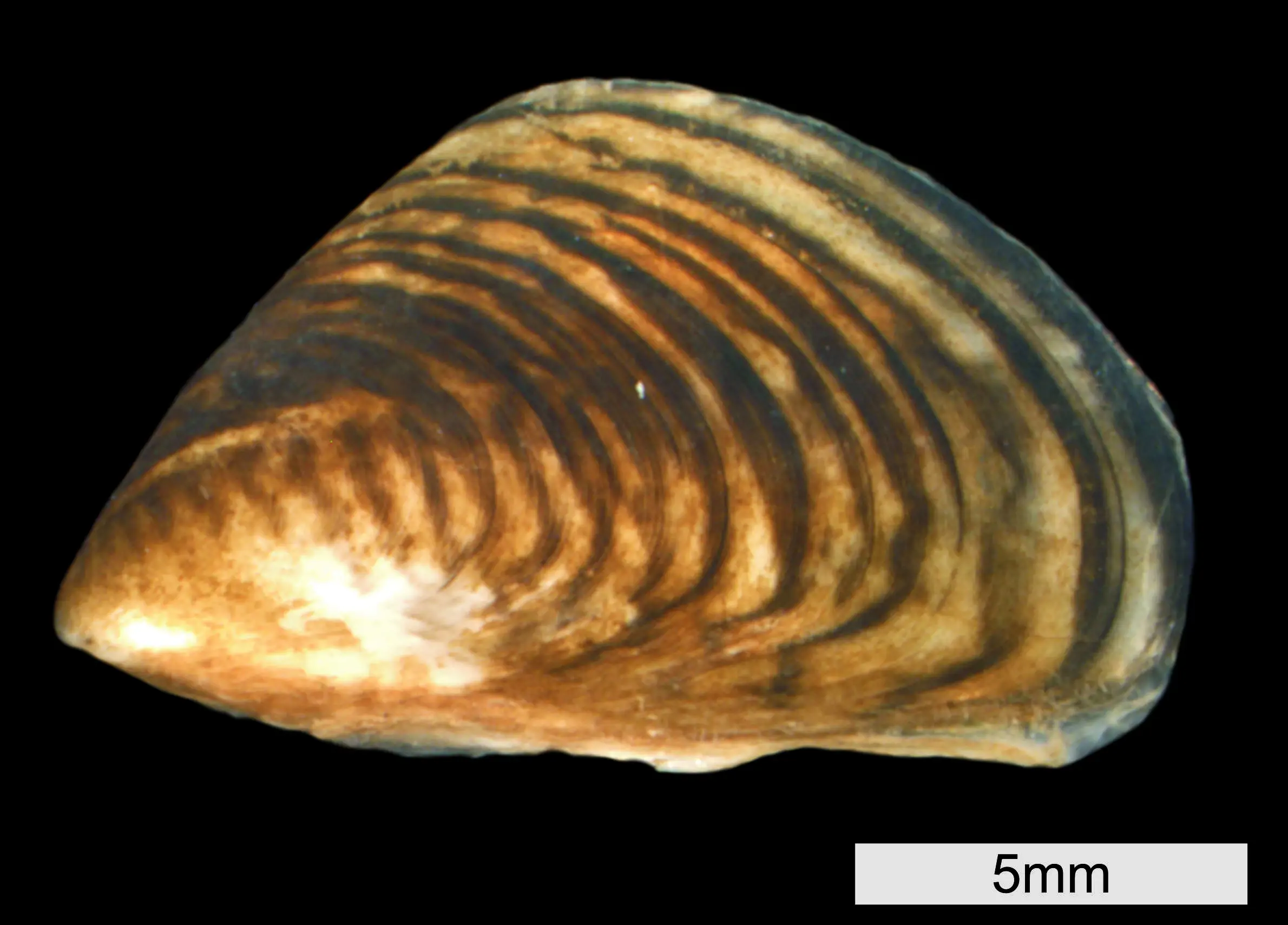
As if zebra mussels were not enough, their cousin, the quagga mussel (Dreissena rostriformis bugensis), showed up in the 1990s. Quagga mussels are similar but can live in deeper, colder waters. While zebra mussels dominate nearshore areas, quaggas spread across the deep lake beds. By the 2000s, quagga mussels had largely displaced zebra mussels in many areas of the Great Lakes.
Together, the two species created an invasive filter-feeding machine that fundamentally changed the lakes’ ecology. Scientists now estimate that nearly all of the plankton produced in some lakes passes through the guts of mussels before anything else can eat it. This “benthification” of energy, redirecting nutrients from the open water to the lake bottom, has reshaped the food web from top to bottom.
The paradox of clarity
So did zebra mussels clean the Great Lakes? The answer depends on what you mean by “clean.”
If clean means “clear,” then yes. The lakes look better. Sunlight penetrates deeper. Scuba divers and recreational boaters marvel at how far they can see.
But if clean means “healthy,” then the answer is no. The lakes are less productive in terms of supporting fish. They are more prone to nuisance algal growth. They recycle pollutants into the food chain. And they have lost much of their native mussel biodiversity. The mussels did not return the lakes to a pristine state; they engineered an entirely new system, one that favors them at the expense of almost everything else.
Fighting back, or not
Managing zebra mussels has proved nearly impossible. Once they are established in a body of water, eradication is not feasible. Some local lakes and reservoirs have tried chemical treatments, but these often kill native species as well. Prevention has become the main strategy: educating boaters to clean, drain, and dry their equipment, enforcing ballast water management on ships, and monitoring new waterways for early invasions.
The Great Lakes themselves are beyond eradication. Zebra and quagga mussels are permanent residents. Instead, management has shifted toward mitigating their effects. For example, scientists are studying ways to control Cladophora blooms, restore native mussel populations in protected areas, and monitor toxin accumulation in food webs.
A lesson in appearances
The story of zebra mussels is a cautionary tale in environmental management. Water that looks clean may be ecologically impoverished. Clarity is not the same as health. A lake can be clear because it is full of filter-feeding invaders, just as a forest can look green but be dominated by invasive plants that choke out biodiversity.
When the lakes “cleaned up” in the 1990s, it was tempting to believe that decades of environmental regulation and investment had paid off. In truth, those efforts did help reduce industrial pollution and sewage inputs. But the sudden transformation was mostly due to a tiny mussel with a knack for multiplying and an appetite for plankton.
Today, zebra mussels remain one of the most infamous invasive species in North America. Their story is not one of ecological redemption, but of ecological re-engineering. The Great Lakes look clearer, but they are also fundamentally different ecosystems than they were before.
That is the paradox: sometimes, “clean” is not the same as “good.”