
Ever since I wrote about Thomas Arundell of Wardour and followed it with a look at Matthew Howard of Virginia and Maryland, it has been impossible to avoid the story that links the two men. The first post examined an English nobleman whose career straddled the political and religious tensions of the early seventeenth century. The second introduced a colonial settler whose name appears in the records of Virginia and later Maryland. The reason these two figures are so frequently tied together has less to do with documented history and much more to do with a genealogical legend that has persisted for more than a century.
According to that legend, Matthew Howard was not born a Howard at all. Instead, the tale insists he was the missing son of Thomas Arundell, spirited out of England under his grandmother’s surname in order to escape the dangers that had already claimed so many members of the Wardour line. In this telling, the anonymous immigrant who turns up in the Chesapeake in the 1630s is actually Matthew Arundell, baptised in London in 1609, recorded as dead in 1620, and then resurrected in Virginia with a new identity and a new life.
It is a compelling story. It contains aristocratic intrigue, a secret exile, a new world, and a coat of arms waiting to be rediscovered. It also survives on a remarkably thin documentary foundation. Yet it continues to show up in family papers, printed genealogies, and the occasional lineage-society application. Given the enthusiasm with which the legend is repeated, it is worth sorting the record from the romance.
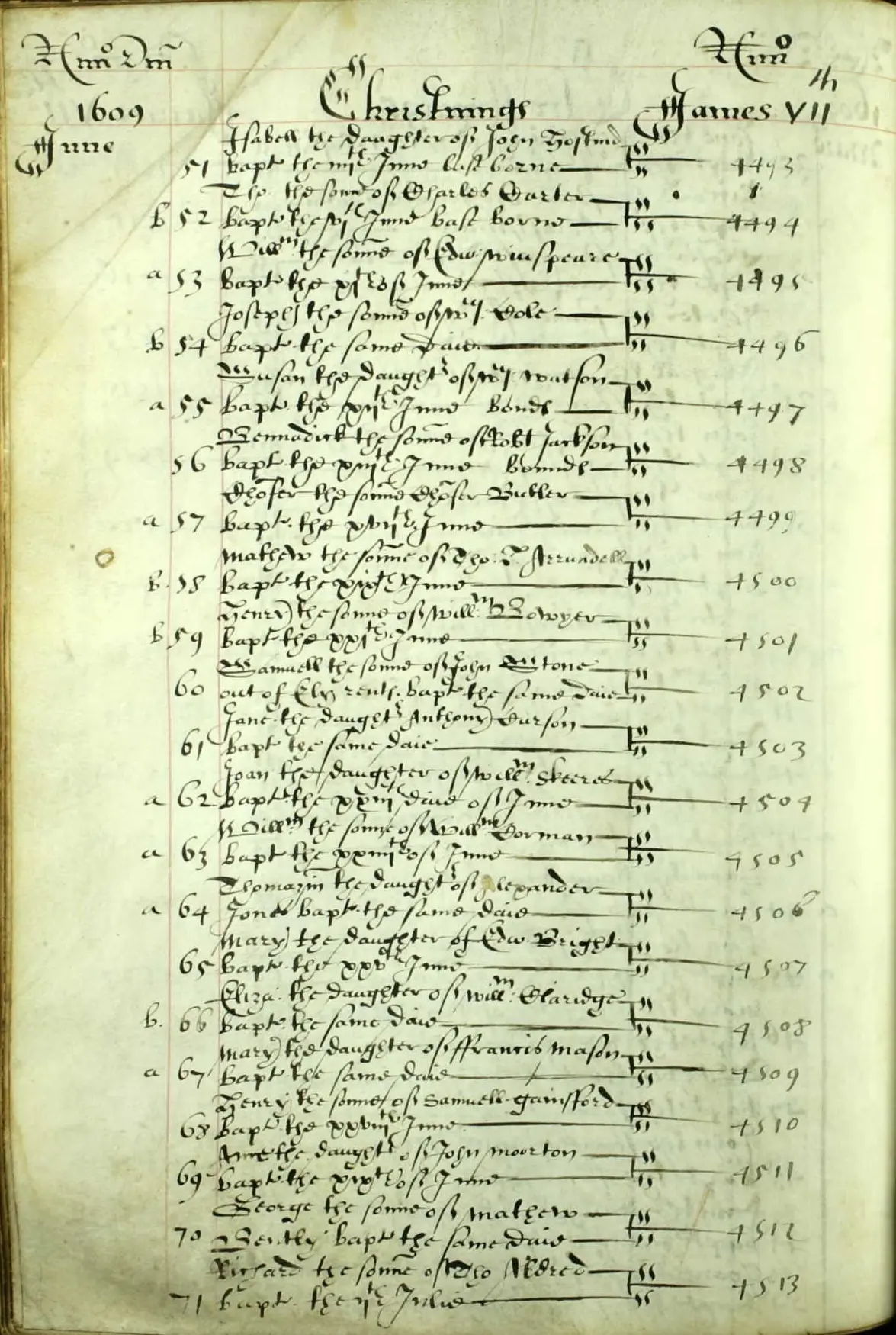
The story begins with two parish entries at St Andrew’s, Holborn. On 19 June 1609, a child named Mathew Arundel was baptised as the son of Thomas, Lord Arundell of Wardour, and Anne Philipson. Another entry dated 2 June 1620 reports that “Matthew Arundell, son of Thomas, Lord Arundell, out of Castill Yard in Holborne, was buried in the Chancell under the Table.” The burial entry is clear, detailed, and consistent with the practice of burying noble children in prominent locations within parish churches. But beginning in the late nineteenth and early twentieth centuries, genealogists proposed an alternative reading. They argued that the burial was either falsified or referred to a different child. Alice Norris Parran’s Register of Maryland’s Heraldic Families (1938) repeated the claim that the boy had not died at all but had instead disappeared, a term she interpreted as an intentional removal from England.
Parran’s narrative added layers that made the story more attractive. She linked the supposed escape to the political dangers that had shaped the Arundell family for generations, then tied the boy’s safety to Virginia, where families with surnames like Arundell, Wriothesley, Willoughby, and Sandys did appear in land patents in Elizabeth City County. She then merged this line of reasoning with the known record of Matthew Howard, who appears in Virginia by the 1630s, marries a woman named Ann, acquires land through the headright system, and joins the Puritans who resettled in Maryland in 1649. The connection was circumstantial, but in the hands of early twentieth-century genealogists it gained a life of its own. Parran wrote that her version had been accepted by several lineage societies, and she presented this acceptance as evidence of its accuracy.
Other genealogical works amplified the claim. Zella Armstrong’s Notable Southern Families and Harry Wright Newman’s Anne Arundel Gentry repeated variations of the story. Newman acknowledged the lack of documentation but still included the claim as a possibility. In this way the idea spread. Once it appeared in print, later writers treated the earlier works as independent corroboration, even though each retelling relied on the same small cluster of assertions.
Several kinds of evidence are usually offered in support of the legend. The first is the baptism and burial pair from Holborn. Supporters argue the records are either misattributed or intentionally misleading. The second is the absence of later English references to Matthew Arundell, which they interpret as a sign of his removal from England. The third is the clustering of familiar English surnames in early Virginia patents, including names that also appear in aristocratic contexts. The fourth is Matthew Howard’s move with the Puritan migration to Maryland and his substantial landholdings, which they view as consistent with gentry origin. The fifth is the use of undifferenced Howard arms on the seal of John Howard’s 1695 will. The sixth is the endorsement of early lineage societies that accepted Edyth Shipley Britons’s application.
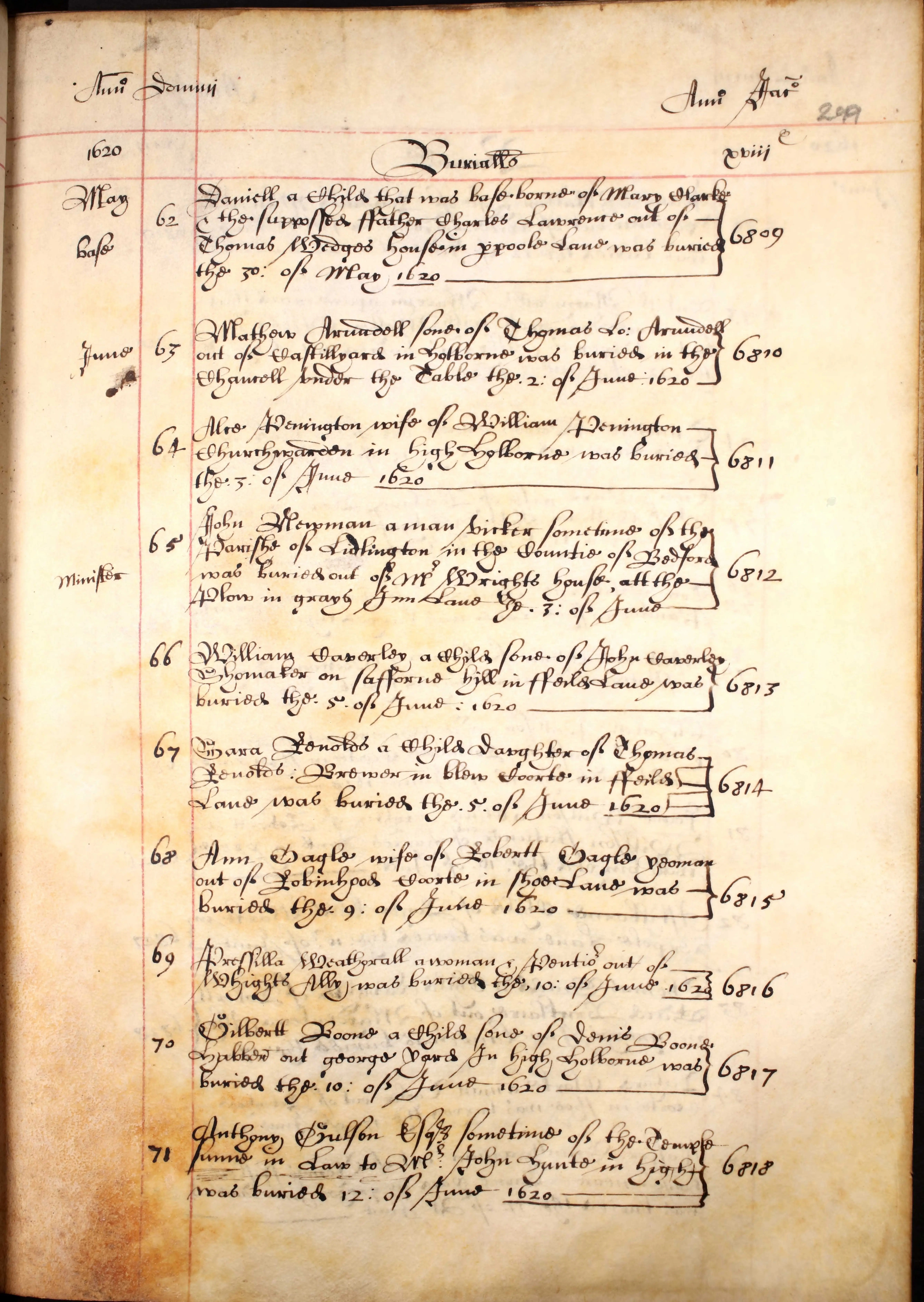
Each point has surface appeal, but all break down once examined. The burial entry from 1620 is explicit and detailed, and nothing in the record hints at a substitution. Fredric Z. Saunders reviews the entry and notes that the burial location, the specificity of the entry, and the general consistency of the parish register leave little room for the kind of error the legend requires. Occam’s razor applies. The child died in 1620.
The absence of later English references is also far from unique. Early modern records often do not account for every younger son. Many died without leaving a will or property, and their names disappear from the surviving record. This is common enough that silence provides no evidence of survival.
The appearance of surnames like Arundell, Wriothesley, and Sandys in Virginia patents proves migration patterns, not kinship. These individuals were likely not connected to Wardour at all. The headright system encouraged investors to transport unrelated laborers, servants, neighbors, and business associates. Migration clusters exist throughout the records of the 1620s and 1630s without signaling aristocratic ties.
The heraldry point is comoplicated. The seal on John Howard’s will uses undifferenced Howard arms but omits the Flodden augmentation granted to the ducal line in 1513. Colonial Americans regularly adopted arms without authority, and the absence of proper differences suggests assertion rather than right. Saunders reviews this issue, too, and notes that if the Howards of Maryland had inherited the arms through Margaret Howard, they should have used a differenced form. They did not. Margaret Howard was herself daughter of Edmund Howard, third son of the second Duke of Norfolk. The cadency rules we think of in differencing were created only after all of these people were dead and within a family, differencing in England was always more optional than not. Even the venerable House of Howard generally differenced only when a branch was granted a peerage. Accordingly, John Howard’s seal could reasonably have been the undifferenced arms of Howard without the Flodden augmentation if he were a descendant of Margaret Howard and using the name.
The religious argument does not help the legend either. The Wardour Arundells were Catholics who appeared in recusancy records, paid fines, and maintained Catholic practice. There is no evidence that Matthew Howard or his known descendants were Catholic, and his close association with Puritan neighbors suggests the opposite. It is difficult to imagine a Catholic child from an aristocratic family being raised among Puritans as a means of protection.
Finally, the endorsement by lineage societies reflects the documentation standards of the early twentieth century. Many societies accepted printed genealogies as evidence, especially when the applicant was a member in good standing. This acceptance is not equivalent to proof.
Taken together, these weaknesses explain why modern researchers doubt the Arundell-Howard link. The legend relies on speculation, reinterpretation of straightforward records, and coincidences presented as patterns. It also hinges on dismissing the one clear and contemporaneous document that exists: the 1620 burial record of Thomas Arundell’s son.
Alternative theories have been proposed, such as a Howard-Douglas connection or a tie to cadet branches of the Norfolk Howards, but these rest on no documentary evidence either. At present, the ancestry of Matthew Howard remains unknown. The absence of a known origin is not a license to invent one. It is only a reminder that many colonial immigrants left few traces in the English record.
Even so, the legend persists. Noble ancestry is appealing. Repetition gives the impression of verification. Heraldry creates a sense of inherited identity even when there is none. And the lack of a documented English origin leaves a narrative vacuum that many are eager to fill.
There is no need to reject the legend with hostility. It is enough to recognize that it does not match the documentary record. A child baptised in 1609 was buried in 1620. A settler named Matthew Howard appears in Virginia more than a decade later. There is no evidence that these two individuals are the same person. Until new archival material emerges, the story remains an example of how easily family tradition takes on the appearance of fact.
That uncertainty is not a failing. It is a space where honest historical work continues. The origins of Matthew Howard remain an open question, and part of the work of genealogy is learning where the record ends and imagination begins. And this is why my Starbucks name is “The Count.”