
Heraldry sits at the crossroads of law, art, and family history. It is a visual language with its own syntax and grammar, a system of signs that records lineage, property and alliances. When most people picture a coat of arms, however, they recall the quartered shields of monarchs and magnates. The royal arms of the United Kingdom (featuring England, Scotland and Ireland) and those of great nobles like the Howard and Churchill families are almost always quartered. Because these famous arms dominate the public imagination, many assume that quartering is the default form of a coat of arms rather than an exception. This misconception has fuelled a wave of “heraldic‑looking” logos divided into four parts and filled with arbitrary symbols—crosses, books, flames or other motifs—that mimic heraldic quartering without understanding its meaning. The result is false quartering: designs that look like quartered arms but lack any genealogical, legal, or historical basis.

This post examines what quartering actually is, why it appears on the arms of kings and dukes, and how modern designers frequently fall into the trap of false quartering. It argues that quartering is not a stylistic choice but a method of marshaling inherited arms; false quartering not only breaks heraldic grammar but also erases the real stories that heraldry was created to tell.
What Is Quartering?
Quartering is one form of marshalling, the practice of combining two or more coats of arms into a single shield to represent marriage, inheritance or office. In the simplest sense, to “quarter” a shield means to divide it into equal parts and place different coats in each part. The Quartering article at The Heraldry Society notes that the term is something of an euphemism; quartering “means the division of the shield into any number of parts, not merely the four implicit in the meaning of the word.” Though the classic quartered shield has four fields (party per cross), the number of quarterings can be larger: during the Victorian age some shields featured hundreds of quarterings. In fact, the College of Arms recorded a shield with 323 quarterings for the family of Lloyd of Stockton.
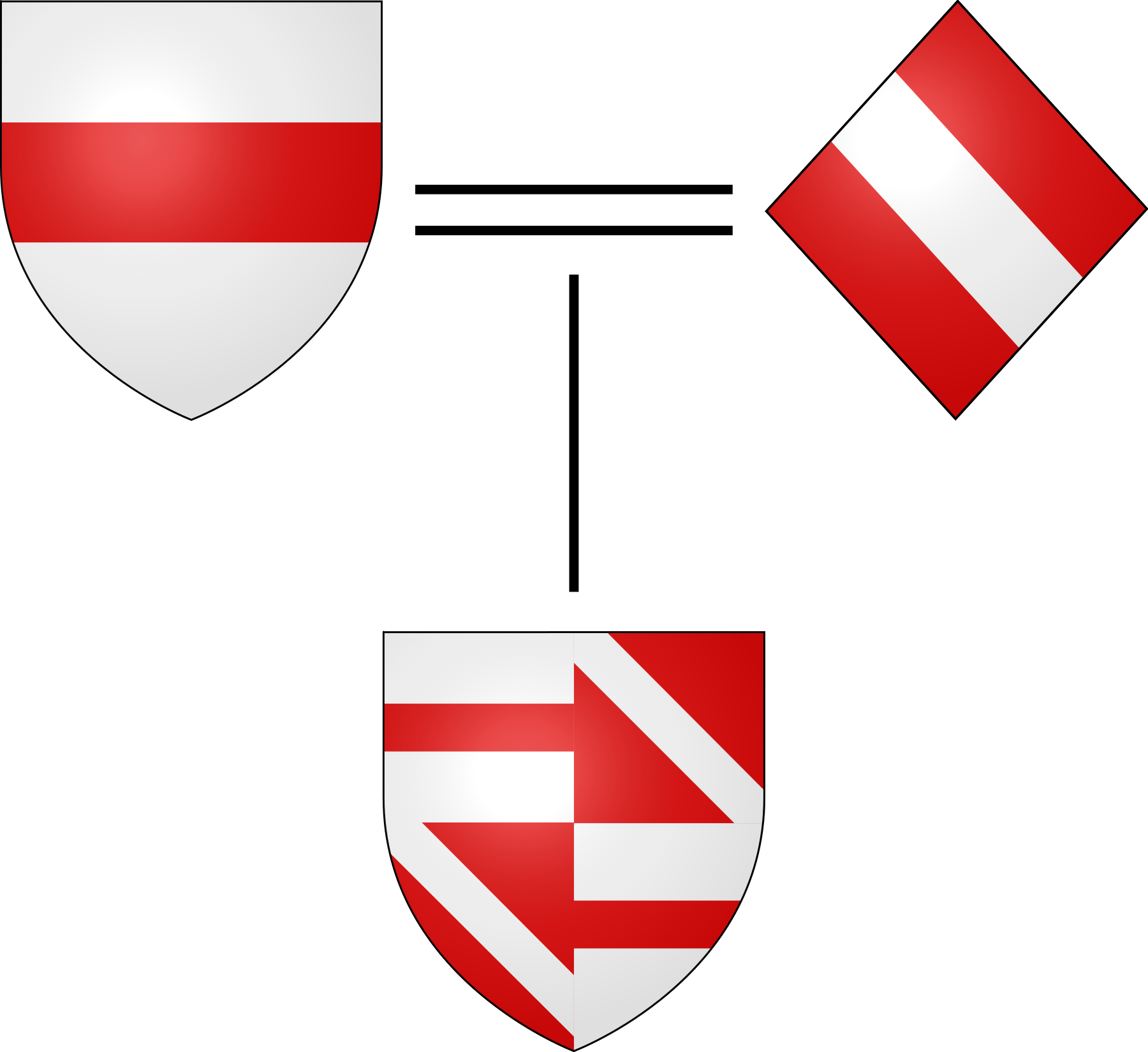
Dividing the field is only one way to combine arms. Dimidiation splices two coats together by cutting each down the centre and fusing the halves; impalement displays two complete coats side by side; and superimposition places one coat in an inescutcheon over another. Quartering became popular because it allows a shield to display multiple ancestries at once while keeping each coat intact.

Origins in inheritance
Quartering emerged in the late medieval period as a way to display inherited claims through female succession. Initially, marshalling was done by dimidiation or impalement, but by the fourteenth century quartering became the preferred method when the bearer was entitled to multiple coats of arms. The underlying purpose, as Fox‑Davies explained, is “to express inheritance by female succession.” When an armiger marries a woman who is not a heraldic heiress, their arms are impaled – placed side by side. Only when the woman is an heiress (a daughter whose father had no surviving sons) can her arms be quartered by her children. The father’s arms occupy the first and fourth quarters; the mother’s arms occupy the second and third. Each subsequent marriage to an heiress brings additional quarterings.
Quarterings can only be acquired through an armigerous person. The Heraldry Society emphasises that “quarterings can only be acquired through an armigerous person”; a child whose mother was the Duke of Ballynahinch’s only daughter cannot inherit her noble quarterings unless the child is themselves armigerous. As the blog of Chris Pigott summarises, “if you are not armigerous in your own right, you cannot inherit your mother’s noble quartering.” In other words, quarterings are not free decorations but records of legitimate inheritance.
Genealogical record, not a decorative choice
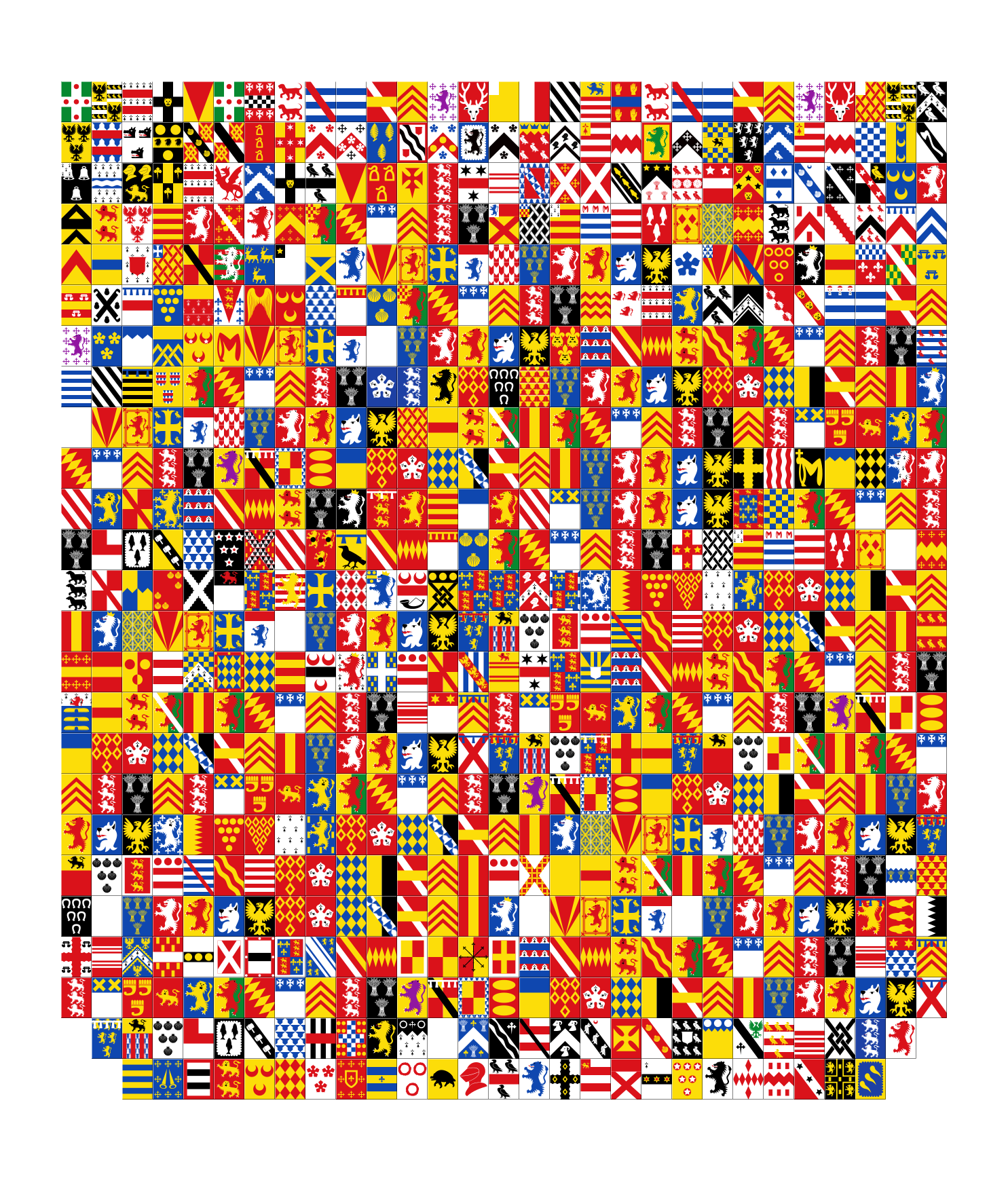

Because quartering records ancestry, there are strict rules about the order and number of quarterings. The first quarter must always display the patronymic arms, those of the bearer’s paternal line, and the remaining quarterings follow the chronological order in which they were acquired. If there are more than four coats to display, the shield may be subdivided into eight, 16 or more parts, or the fields may be grand‑quartered, where one quarter is itself quartered. Scottish practice often employs grand quarters: when a man inherits quarterings from his mother, he may divide the shield into four grand quarters and place his father’s entire coat in the first and fourth and his mother’s in the second and third. In most traditions, there is no limit to the number of divisions; examples include the Powys‑Lybbe family’s 64 quarterings and the Grenville arms with 719 quarterings.
Quartered arms therefore serve as visual genealogies. They show which families have merged through heiress marriages and in what order those inheritances occurred. The Heraldry Society advises that “for the ordinary display of arms the use of one coat is usually most artistic and convenient” because quarterings can become cluttered and illegible. Many families entitled to numerous quarterings display only a selection. The Duke of Norfolk, for example, has a right to many quarterings yet uses only four.
The Allure of the Quartered Shield
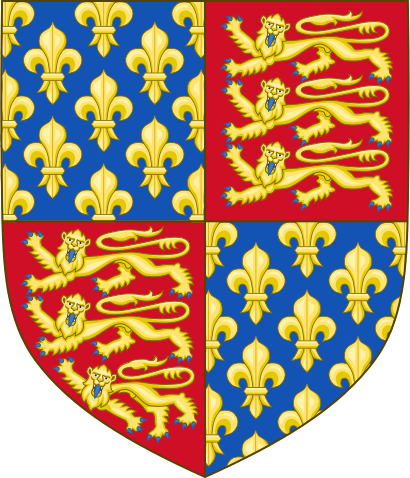
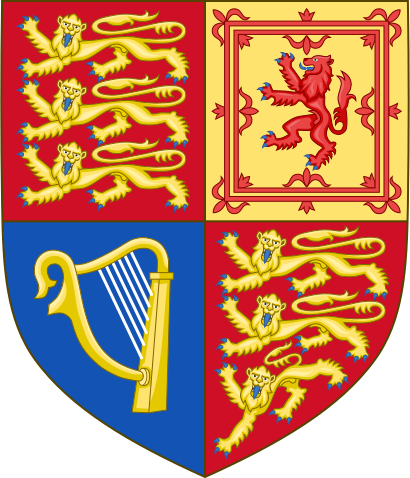
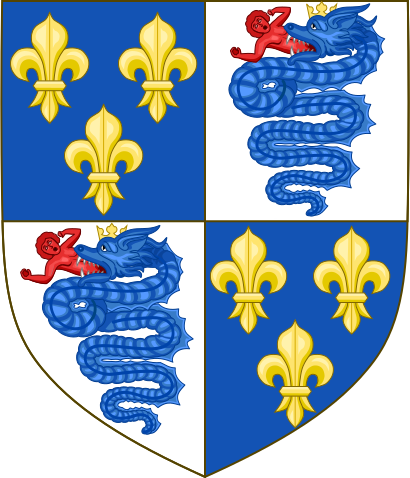
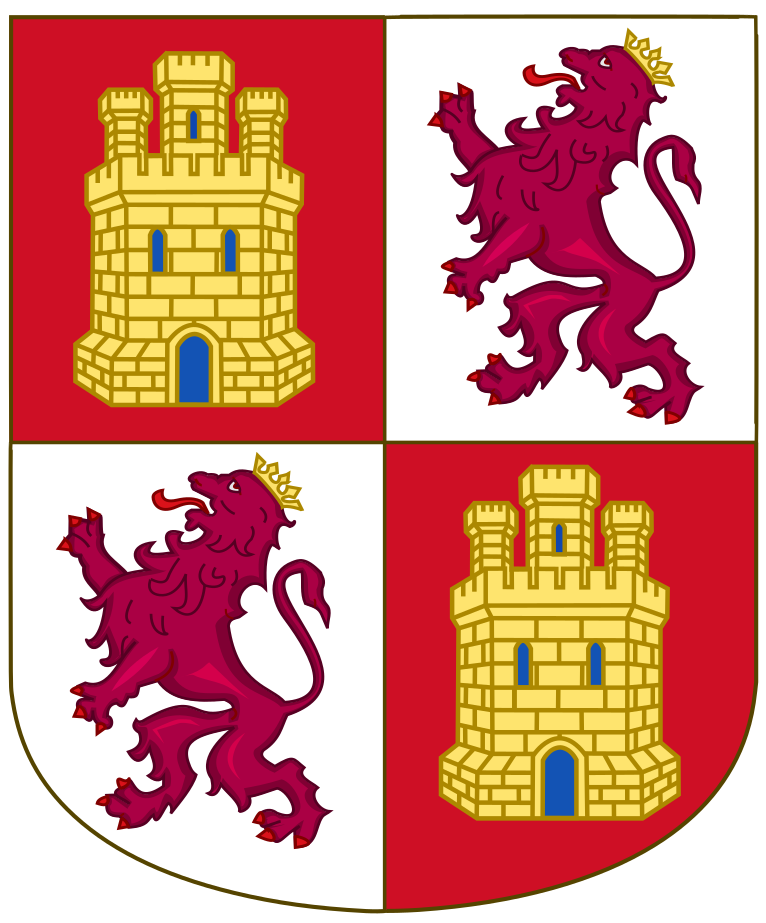
Quartered arms dominate the popular imagination because they belong to the most visible and prestigious institutions. Starting in 1340, King Edward III of England quartered his arms with those of France to assert his claim to the French throne. According to the York Historian article on marshalling, Edward III’s quartering of England and France is a well‑known example of political marshalling. When James VI of Scotland became King James I of England in 1603, the royal arms changed again: the arms of France and England were quartered in the first and fourth grand quarters, with Scotland in the second and Ireland in the third. The modern royal arms of the United Kingdom continue to display England, Scotland and Ireland in four quarters. Other examples include the Kingdoms of Castile and León and the Duke of Milan, among numerous others.
Great noble houses also accumulate quarterings as marriages to heiresses compound over centuries. The Howard family (Dukes of Norfolk) quarter the arms of Howard, Brotherton, Warenne and FitzAlan; the Churchill family (Dukes of Marlborough) quarter their arms with those of the Cope family and others; the Douglas, Hamilton and Campbell families similarly display multiple quarterings. These arms are seen on palaces, stately homes, official documents and military colours, reinforcing the impression that a prestigious coat of arms should be quartered. .
Misperceptions and the “high‑status look”
Because quartered arms are associated with royalty and nobility, many assume that quartering conveys prestige regardless of genealogical entitlement. In modern graphic design, particularly for universities, clubs and municipalities, it is common to see a shield divided into four quarters with different symbols in each. These designs mimic the visual vocabulary of quartering to evoke tradition or authority. The problem is that quartering is not simply a way to include multiple motifs; it is a legal statement about ancestry. Using a quartered layout to assemble random symbols is like wearing military medals you did not earn. As the Heraldry Society writes, the word quartering “means the division of the shield into any number of parts” but implies inherited coats. Treating the divided shield as a blank canvas for unrelated elements divorces it from its purpose.
False Quartering and Its Consequences
False quartering can also occur when designers combine arms without respect for order or hierarchy. For example, placing the arms of two unrelated families randomly in quarters or altering the order of quarterings to prioritise a preferred coat breaks the rule that the paternal arms occupy the first quarter and that subsequent quarterings follow chronologically. In English heraldry, one may not display the arms of families from whom one descends only through a female line unless the woman is a heraldic heiress. In addition, omitting part of the chain of quarterings invalidates the entitlement.
Problems created by false quartering
The consequences of false quartering are both aesthetic and ethical:
- Cluttered, unreadable design. Quartered arms are inherently complex because each quarter contains a full coat of arms. As the Heraldry Society notes, quartered arms often do not reproduce well on seals or stationery because the charges must be engraved so minutely that they lose their form. When modern logos cram multiple symbols into a quartered shield, legibility suffers; the viewer is left with a jumble of tiny icons.
- Misleading associations. A quartered shield suggests inherited legitimacy. False quartering can create an impression of antiquity or nobility where none exists. In extreme cases, it may be interpreted as falsely claiming descent from a family or appropriation of someone else’s arms. Heraldry is governed by heraldic authorities (the College of Arms in England, the Court of the Lord Lyon in Scotland and others) that regulate the assumption and display of arms. Displaying a quartered shield without entitlement can therefore misrepresent lineage or infringe on someone’s armorial rights.
- Loss of storytelling. Quarterings tell a story about marriage, inheritance and property. When quartering is used merely as a decorative grid, the narrative disappears. The armiger’s history, the marriages to heiresses, the titles and lands inherited, is replaced by arbitrary symbols. Heraldry becomes a pastiche rather than a record.
Designing Coherent Modern Arms
Modern institutions can draw on heraldic tradition without falling into the trap of false quartering. The key is to understand heraldry’s grammar and to design with integrity rather than imitation.
Use a unified coat of arms
For most new arms, a single unified shield that symbolises the bearer’s identity is more effective than a quartered one. The Heraldry Society advises that “for the ordinary display of arms the use of one coat is usually most artistic and convenient.” A unified coat may employ ordinaries (fess, bend, chevron, cross), charges (animals, objects) and colours to convey meaning. Because arms are personal property, each armiger may design a unique and meaningful blazon without assuming multiple quarterings. Modern corporate or institutional arms can be designed with a single, simple shield that references history or mission without mimicry.
Marshalling with clarity
When more than one coat of arms must be displayed – for example, when two organisations merge or when a university with multiple colleges seeks to represent its components – marshalling can be used appropriately. Quartering is justified when there is a genuine genealogical link (e.g., merging institutions with existing armorial bearings), but designers should consider impalement or grand quartering as alternatives. Each method has its rules. Marshalling should respect the precedence of arms, ensure legibility and avoid unnecessary proliferation of quarterings.
Preserve heraldic integrity
Designers can avoid false quartering by following a few principles:
- Respect inheritance: Only quarter arms when there is a legitimate right through heiress marriages. Ensure the arms you are quartering belong to you or your institution.
- Follow order and placement: The patronymic arms always occupy the first quarter; additional quarterings follow in chronological order.
- Avoid random symbols: Do not use quartering as a way to cram unrelated charges onto a shield. If multiple symbols are desired, consider using a chief, base or other ordinaries to separate elements within a single coat.
- Simplify for modern use: Remember that arms will appear on letterheads, websites and merchandise. Complex quarterings may become illegible. Simplicity aids recognition and honours heraldic tradition.
Conclusion
Quartering is one of heraldry’s most striking devices, but its beauty derives from its history. It is a visual genealogy, not a decorative grid. True quartering records the marriages, inheritances and claims of armigerous families. False quartering, by contrast, uses the appearance of quartering without the substance: it divides a shield into four or more parts and fills them with arbitrary symbols or unrelated arms. This practice misunderstands heraldry and undermines the narratives that coats of arms are meant to convey.
Designers and institutions seeking to adopt heraldic imagery should therefore learn the grammar of heraldry before writing in its language. By understanding what quartering actually is, a method of joining inherited arms governed by legal and genealogical rules, we can appreciate why it appears on the shields of kings and dukes and why it is inappropriate as a default. Thoughtful, well‑designed arms will respect inheritance, tell a coherent story and avoid the trap of false quartering. In doing so, they will honour heraldry’s enduring purpose: to make visible the bonds of family, history and identity.